Liturgical Dwellling: Agora Ballroom, Level L2
Past exhibition
Overview

Liturgy traditionally refers to a structured form of collective worship shaped through repetition, rhythm, gesture, and ritual. In Liturgical Dwelling, the term expands beyond religion into the choreography of everyday life. Inhabiting routines become liturgical acts through their repetition and accumulated significance. Silence, repetition, and stillness shape the rhythms of everyday life. These actions accumulate into forms of spatial and emotional memory. Drawing from Henri Lefebvre’s understanding of space as produced through embodied routines and rhythms, Liturgical Dwelling approaches liturgy as something embedded within ordinary life.Ritual emerges through acts of return, care, devotion, and inhabitation.
The exhibition approaches dwelling as an ongoing negotiation with memory, intimacy, labour, and historical residue. Édouard Glissant’s notion of relation becomes significant here, where identity forms through entanglement, opacity, and coexistence. Across the exhibition, liturgy functions as a structure of orientation through which bodies remain situated within unstable historical and emotional conditions. What emerges is a form of stillness charged with accumulation, where the sacred persists through the quiet endurance of everyday life.
Works
-
 Aiman, #7e7f7c, 2026
 -
Aiman, #83796b, 2026
-
Aiman, #8d8783, 2026
-
Alexander Sebastianus, Parts of Forest XX, 2025
-
Alexander Sebastianus, Sisa-Sisa Sunyi #01, 2025
-
Allyson Jeong, Unbound Adorment I, 2024
-
Arahmaiani, Silent Rainbow II, 2018
-
Arahmaiani, Silent Rainbow VII, 2018
-
Ardi Gunawan, Silicone designer, 2026
-
Ardi Gunawan, Oops, Pozzo , 2025
-
Audya Amalia, 501 Hz, 2026
-
Dabi Arnasa, Ruang Antara , 2026
-
Dabi Arnasa, Taman Doa, 2026
-
Dabi Arnasa, Sweet Dreams , 2026
-
Dabi Arnasa, Another Landscape, 2026
-
Galih Adika, Potrait of a Man in a Tuxedo, 2026
-
Galih Adika, She, 2025
-
Hadassah Emmerich, Infinity (the 8th Papaya), 2023
-
Ida Lawrence, It's raining here in Malaysia, Jauhkan daripada makanan dan kanak-kanak, 18+ Halal Showcase, Cheers, baby, Nearly the first time, 10/10, 2013
-
Ida Lawrence, Superstition in the Pigeon, 2023-2025
-
Ida Lawrence, Beast Wishes, 2025
-
Ines Katamso, Series Naga 5, 2025
-
Ines Katamso, Series Biolateral 2, 2025
-
Ines Katamso, Rhizomorph 1, 2025
-
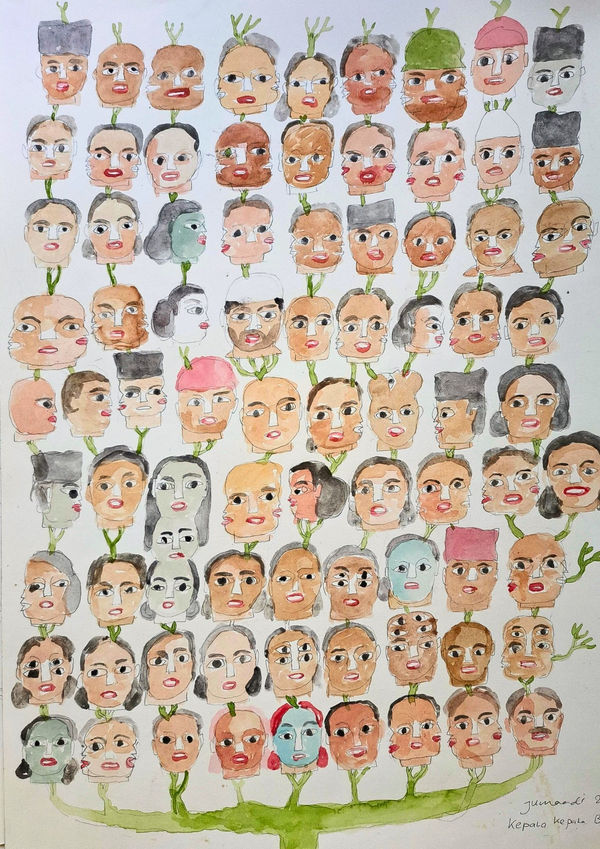
Jumaadi, Kepala Boneka 01, 2025
-
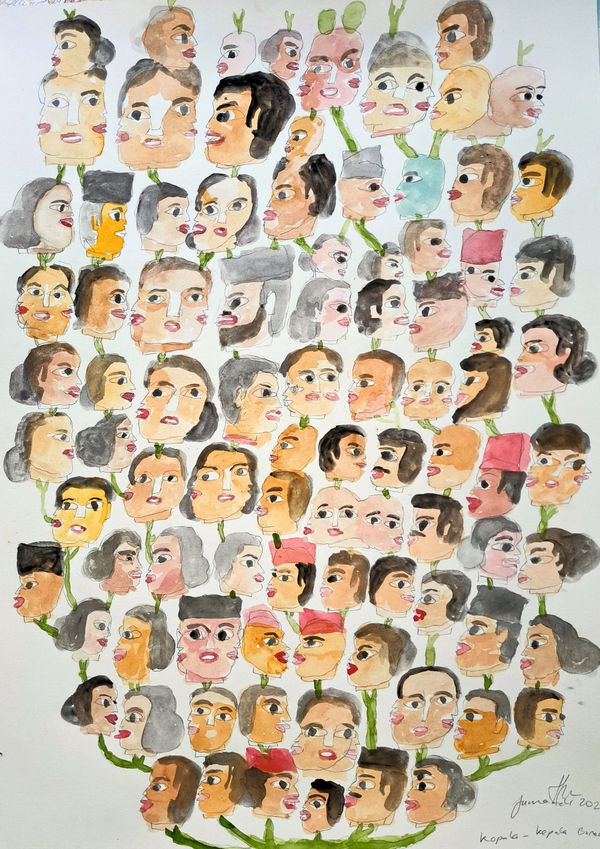
Jumaadi, Kepala Boneka 04, 2025
-
Luh’De Gita, The Rangdas are Coming, 2026
-
Luh’De Gita, Echoes of Janger, 2026
-
Luh’De Gita, You See , I Study Art , I Like Basquiat #2, 2024
-
Luh’De Gita, Don't Let Marilyn Hear Us, 2024
-
SIllyndris, Domestic Method, 2026
-
SIllyndris, Barbed Veins, 2026
-
SIllyndris, The Meat We Agree On (Value Pack), 2026
-
Sinta Tantra, Garden of Light, 2026
-
Sinta Tantra, Red Offering, 2026 Sold
-
Sinta Tantra, Horizon, 2024
-
Sinta Tantra, Haze, 2024
-
Vanessa Jones, Warriors, 2026
-
Vanessa Jones, Archers, 2026
-
Yosefa Aulia, Eyes, 2024
-
Yosefa Aulia, Spring, 2024
-
Yosefa Aulia, Sweetness and Light , 2024
-
Zikry Rediansyah, Share The Field, 2026
-
Zikry Rediansyah, Boy and Melting Ice, 2026
-
Zikry Rediansyah, Lazing In The Park, 2026